Published by GeoPoliticsToday on Sept 12, 2023
By Louis Power
September 12th, 2023
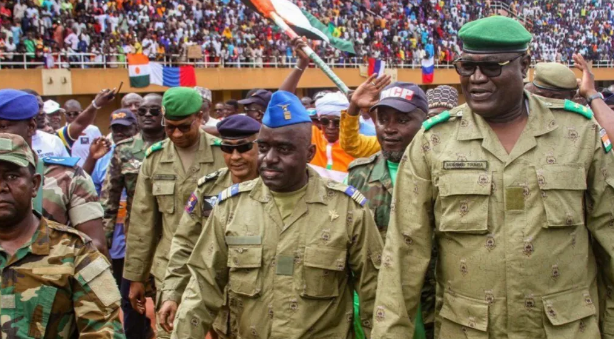
On July 26th, 2023, yet another coup d’etat shook the political balance of the Sahel, this time occurring in Niger. This development prompted nations from ECOWAS (Economic Community of West African States) to issue an ultimatum declaring their intent to engage in military action if democratically elected President Mohamed Bazoum is not returned to power. Such a declaration has led to other junta-led nations such as Mali and Burkina Faso to proclaim their willingness to defend Niger in case of an ECOWAS led intervention. With the emergence of a growing crisis that could lead to all out war, the situation in Niger is one that requires the utmost diligence.
Niger, is a landlocked country located in West Africa, its population is estimated to be just over 25 million and are predominantly Muslim. In regards to its geography, Niger is dominated by the Sahara desert and as such, agriculture is located in the less-arid south, while the north plays home to several mines, most importantly uranium ore.
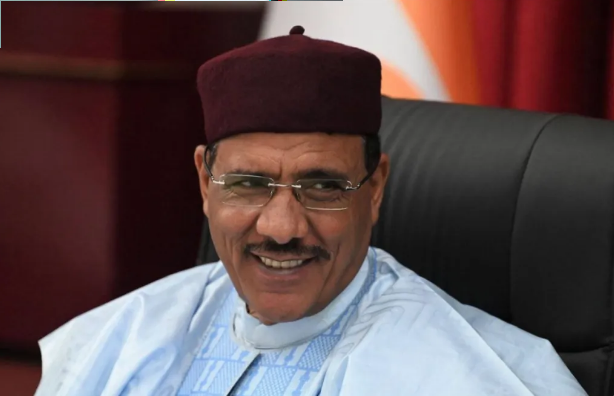
Niger, an historic ally to Western nations such as France and the United States in the fight against Islamic terrorism was seen as one of the last bastions of democracy and stability in the Sahel. Former president Mohamed Bazoum was democratically elected and seen as a victory for the democratic world before his eventual ousting by members of the presidential guard led by Abdourahame Tchiani late last July. In regards to security in the region, Niger played a vital role as the location of several foreign military bases including French and American bases housing drone facilities and airfields and as such, the change in leadership has prompted concern amongst both French and American military officials on the future of anti-terrorism operations conducted out of Niamey.
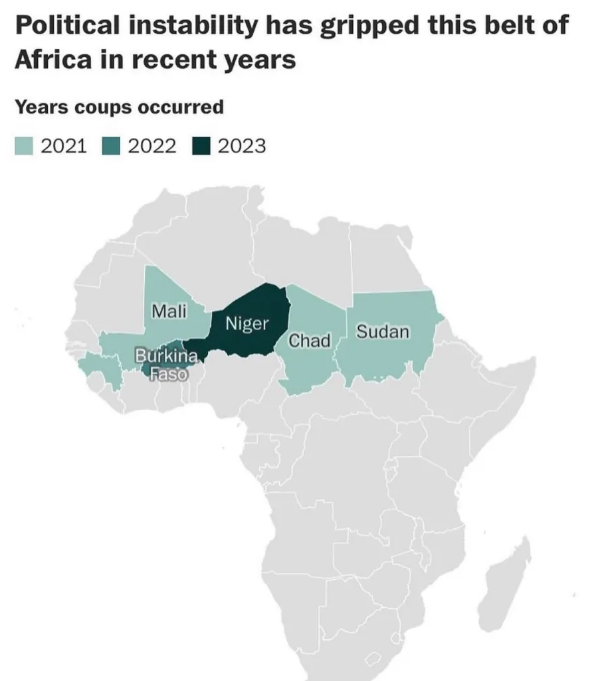
These officials have a right to be concerned, the French in particular. Guinea, Burkina Faso, Mali, Chad, Gabon, all these former French colonies have experienced one or more coups in the last three years, with the former three showcasing a distinct anti-French message just as in Niger. France, being a former colonial empire has been viewed in a negative light by local populations but their strong military support in the face of Jihadism in many of these nations has allowed for their presence to be tolerated. However, high unemployment, large poverty rates, and low economic activity has created a breeding ground for militant recruitment and in turn has seen a massive spike in Jihadist violence in the region. As these militant groups grow stronger, an increased pressure has been put onto these democratic governments in the public space and therefore, coups led by military figures are all too common, portraying themselves as “guardians of the state” to the mass support of a tired and fearful population.
This was the case with Niger, and on July 26th, Bazoum was ousted and replaced by a military junta with a likeness to that of Mali or Burkina Faso, and with it the anti-French sentiment. In recent weeks, the new junta government has made various claims on social media about the imminent expulsion of both French diplomats and the military attachment located in the country, following the civilian evacuation of EU citizens in the aftermath of the coup.
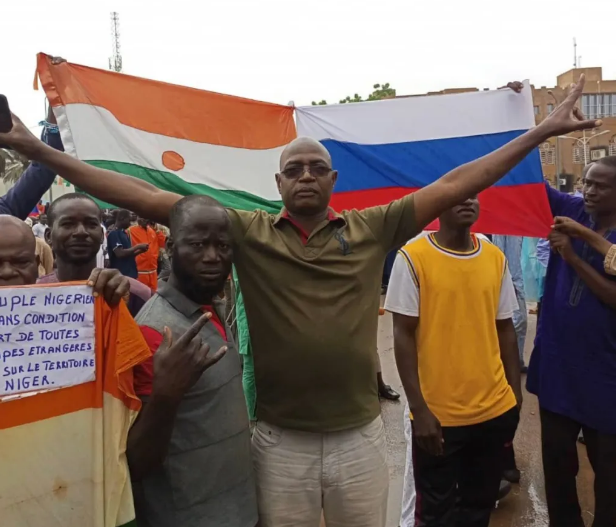
Along with anti-French sentiment, Russian flags and calls for Wagner PMC to enter the country were seen at pro-junta rallies across the country, as was witnessed in other junta-led nations. However, with the death of Yevgeny Prigozhin and the majority of Wagner’s leadership on August 23rd following the downing of Prigozhin’s plane under suspicious circumstances, it seems as if Wagner’s role in the country will be much more subdued. Wagner has been for the better part of the last decade, Russia’s primary asset in Africa, providing security for pro-Russian heads of state in countries like Mali and the Central African Republic, and it seemed to be as of recent the case for Niger.
While Russian influence will likely not play much of a role in any upcoming conflict between Niger and the ECOWAS nations, fellow junta controlled countries have voiced their support for Tchiani, in particular Burkina Faso and Mali. Both nations share a border with Niger as well as face similar challenges, namely jihadism and sanctions imposed by ECOWAS following their suspension from the African Union. Following ECOWAS threats of utilizing military force, both Burkina Faso and Mali declared their intent to send troops and equipment to the country. How willing are these countries to wage a war with their neighbors while also dealing with internal insurgencies is still up to debate, but recent footage on the social media platform Telegram have showcased Malian vehicles arriving into Niger, as well as aircraft landing in Niger’s air force bases.
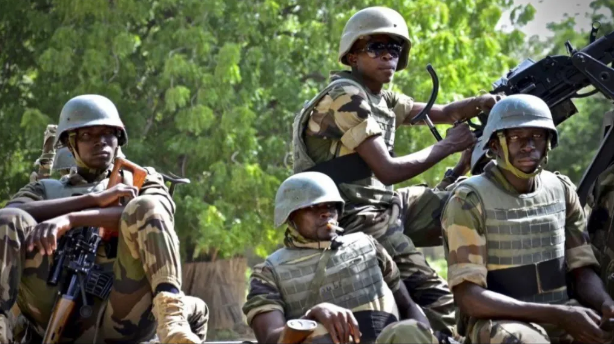
The deciding factor on whether this crisis dies out or becomes the spark to a larger regional conflict all depends now on ECOWAS’s response. For several weeks, defense ministers and leaders alike have called for the return of Bazoum’s presidency or face a united invasion of the Niger by coalition troops. ECOWAS Commissioner for Political Affairs, Peace and Security Abdel-Fatau Musah stated during a closing ceremony of a meeting of West African army chiefs, “The D-day is also decided. We’ve already agreed and fine-tuned what will be required for the intervention,”. The threat of ‘D-day’ and a united occupation of Niger makes a diplomatic conclusion to this crisis less probable. An additional factor for ECOWAS to consider is if an invasion is worth it, as such a conflict between multiple state actors could lead to increased instability in the region, prompting an increased number of refugees fleeing abroad as was witnessed in both Ethiopia and Sudan as of recent.
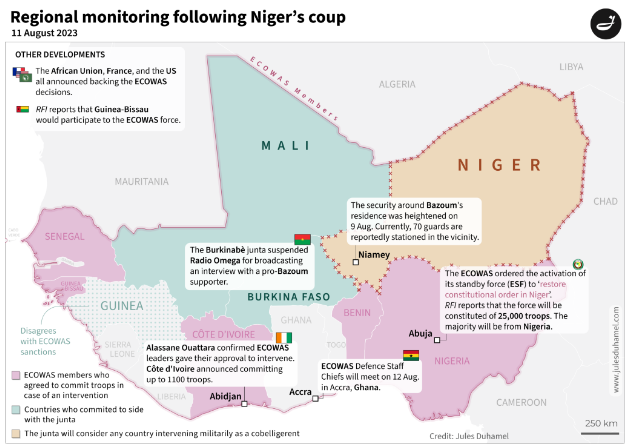
The Junta and their allies have already played their hand, the coup has succeeded, the majority of the population is in support, and they have reached out to neighboring allies and have been successful in getting both the political and military support required in case of an invasion by ECOWAS. With all eyes on ECOWAS, the question remains if they will intervene or not. The language used by leaders of ECOWAS nations is certainly indicative of their support for military action. However, as mentioned previously, the precarious situation West Africa and the Sahel are currently in means that this crisis could even further exacerbate instability in the region. Many are still hoping for a diplomatic conclusion, Algeria and Chad in particular has been adamant that such an outcome is the only correct course of action as this crisis extends into its second month.
Whatever is to occur in the next weeks or months will have a dramatic impact on the security situation of West Africa and the Sahel and hold a greater political impact on the nature of coup d’etats on the African continent. What has happened in Niger is just one facet of a larger clash between military-led governments and those that support democracy, with external actors such as Russia and France looking to exert their economic and political influence in a region plagued by instability. The situation in Niger and the greater region is one that must be closely monitored as a spark here could ignite the entire Sahel into a state of conflict.