Published by GeoPoliticsToday on April 17, 2024
By Louis Power
April 17th, 2024
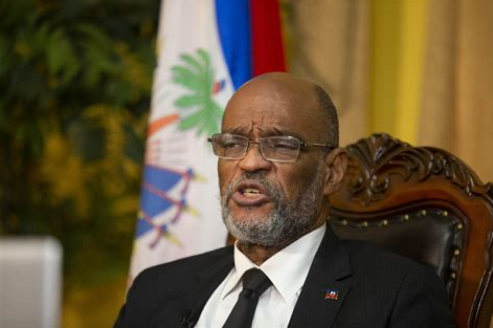
On the 11th of March, 2024, Ariel Henry, acting Prime Minister and President of Haiti announced his resignation from government following his inability to return to Haiti. Henry was unable to return as his plane was prevented from landing in the nation’s capital, Port-au-Prince due to clashes between government forces and gangs upon his arrival. Returning from Kenya, Henry was in the Eastern African country looking to sign an agreement to allow a 1,000 strong Kenyan-led multinational security support mission to restore order to the violence plagued nation. This was just another development in the strange and tragic modern history of the Caribbean’s most populous nation.
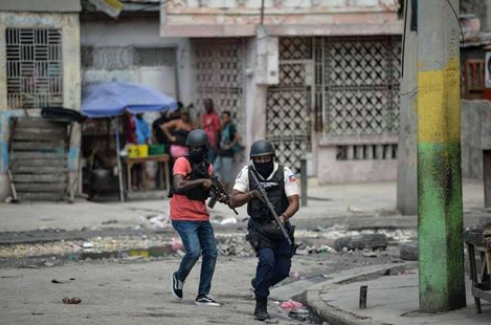
Since 2018, Haiti has been in a state of perpetual crisis: an energy crisis, a plague of kidnappings, food insecurity, political assassinations (including former President Jovenal Moïse in 2021), political suppression, widespread corruption, and an ongoing gang war have turned Haiti into the most dangerous nation in the Western Hemisphere.
Since 2020, the gangs of Haiti have been engaged in a nationwide war, with the vocal point of this violence being situated in Port-au-Prince. The gangs of Haiti wield unrivaled power in the country, often being better armed than their governmental counterparts, targeting critical state infrastructure, setting up roadblocks, with some estimating that these groups control up to 80% of Port-au-Prince.
The two gang coalitions that are most prominent in Haiti are G-Pèp and their infamous rivals, the Revolutionary Forces of the G9 Family and Allies (G9). Led by former police officer and warlord Jimmy “Barbecue” Chérizier, G9 has stolen the international limelight as the leading criminal organization responsible for the current crisis. Under Barbecue’s rule, the G9 gang had established close ties with former President Moïse, orchestrating massacres against political opponents, conducting mass rapes, and the looting and torching of Port-au-Prince’s various neighborhoods.
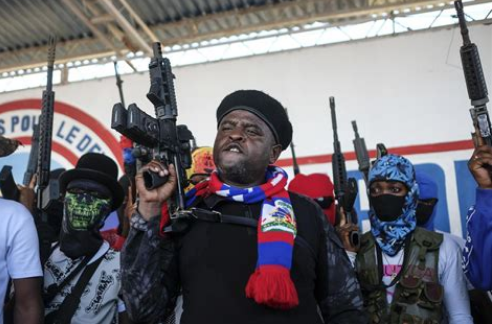
Following the assassination of their ally Moïse, G9’s influence in Haiti expanded, leading to large clashes in Haiti’s capital between them and G-Pèp, as well as voicing open opposition to Haiti’s government, which fell under the control of the unelected Ariel Henry. In September 2022, amidst a period of civil protests triggered by ongoing fuel shortages and the government’s decision to eliminate fuel subsidies, the G9 gang seized the Varreux fuel terminal. The ensuing blockade led to a worsening in conditions in Haiti, reducing essential services in the country, forcing businesses, hospitals, and schools to shut before the government negotiated Barbecue’s ending of the Varreux blockade.
While the Varreux fuel terminal blockade was eventually resolved following weeks of negotiation, the worsening situation in Haiti led to the formation of the anti-gang vigilante groups known as the bwa kale in late 2022. The bwa kale took justice into their own hands, attacking suspected gang members, often resulting in the lynching of said members, in turn resulting in retaliatory attacks by G9 and other gangs.
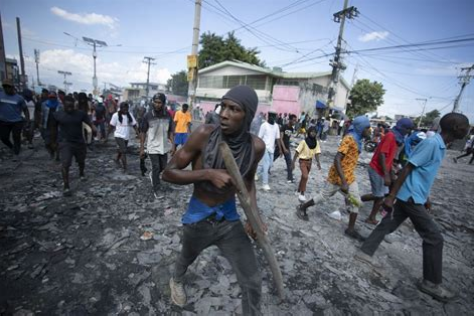
It was in this climate of continuous and escalating violence that led the United Nations Security Council to authorize a one-year deployment of a Kenyan-led international force to Haiti in an attempt to restore law and order to Port-au-Prince. As of recent, the gangs of Haiti have stepped up their operations, engaging in a multitude of high-profile kidnappings, attacking the Toussaint Louverture International Airport, and under Chérizier’s orders orchestrating of the largest prison breaks in the islands history, freeing over 4,700 prisoners and causing the Haitian government to declare a 72-hour state of emergency on the island.
The resignation of Henry has left the country without a leader, now (as of April 17th, 2024) being headed by a transitional council. This remarkable ousting of a sitting president has only demonstrated to the world the limited influence the government has over its own nation. The power-vacuum exhibited in the nation following Moïse’s death has since been filled by the Chérizier’s G9 and other criminal gangs, placing Haiti dangerously close to “failed state” status.
The situation in Haiti is ever-changing and is reaching a new boiling point as thousands are displaced due to the uptick of violence. Additionally, food, energy, and medicine insecurity has prompted the international community to monitor the events in Haiti closely as thousands flee Haiti in search of a better future. With the Kenyan-led deployment now suspended, the future of Haiti looks grim as the people of Haiti continue to suffer, leaving many wondering if not this, what will it take for the international community to act in order to restore stability to the crisis-plagued nation?